Delve Tech Due Diligence · Meta-Analysis
Cloud Infrastructure Landscape
AWS dominance, PaaS-first patterns, and platform concentration risk
287
AWS (59%)
74
GCP (15%)
39
Supabase
23
Vercel
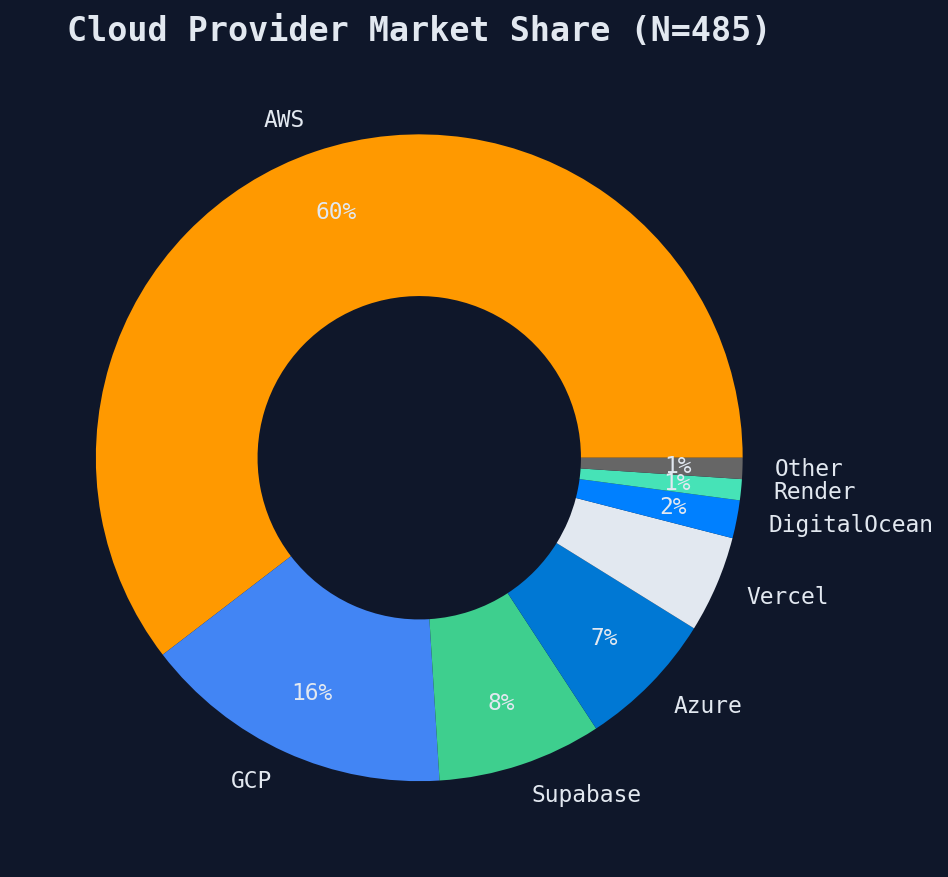
Market Share
| Provider | Companies | Share |
|---|---|---|
| AWS | 287 | 59.2% |
| GCP | 74 | 15.3% |
| Supabase | 39 | 8.0% |
| Azure | 33 | 6.8% |
| Vercel | 23 | 4.7% |
| DigitalOcean | 9 | 1.9% |
| Render | 5 | 1.0% |
| Other | 5 | 1.0% |
| Fly.io | 5 | 1.0% |
| Railway | 2 | 0.4% |
Systemic risk: 59% of the portfolio runs on AWS. A major AWS regional outage would simultaneously impact 287 companies.
Cloud Provider vs Score
Does cloud provider choice predict tech maturity?
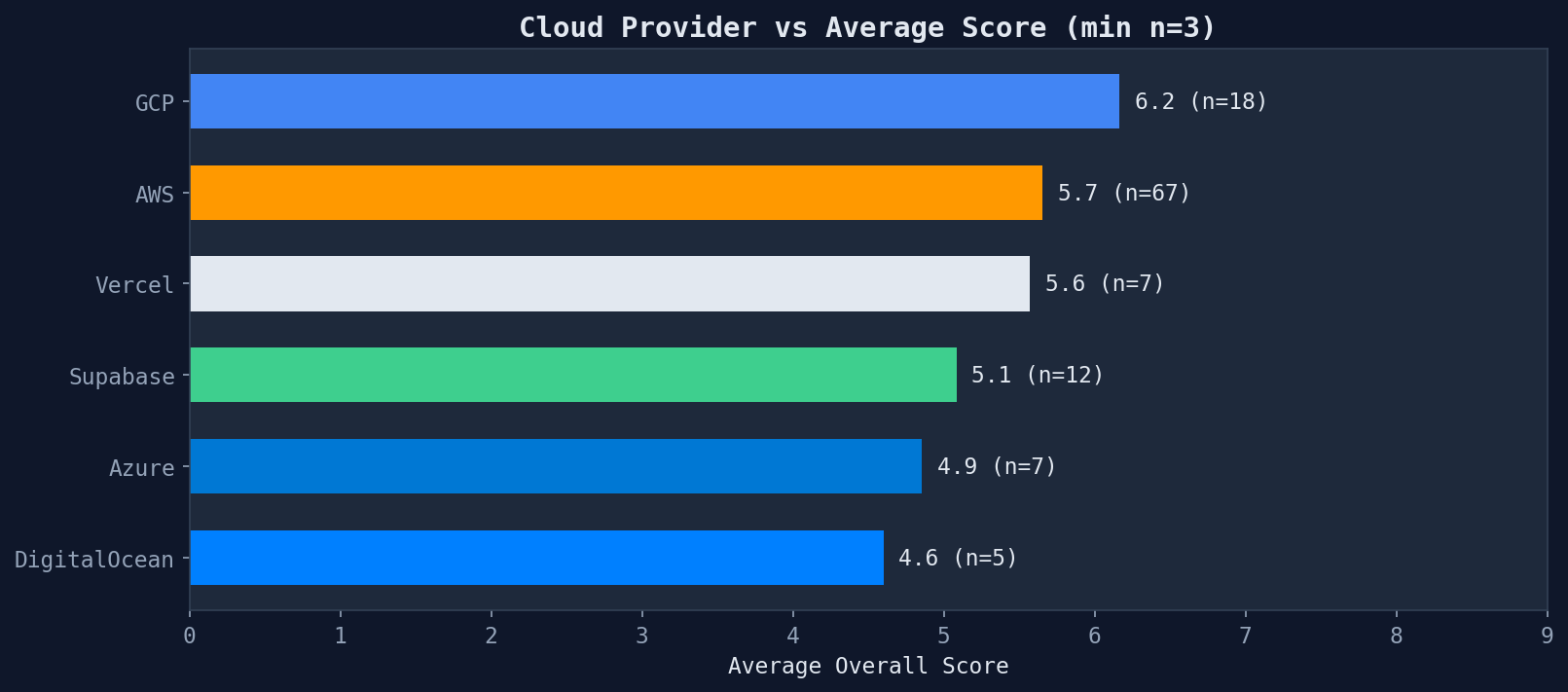
Cloud choice alone doesn't determine score — architecture decisions matter more than which cloud you're on. But PaaS-first companies tend to have simpler architectures with fewer disclosed features.
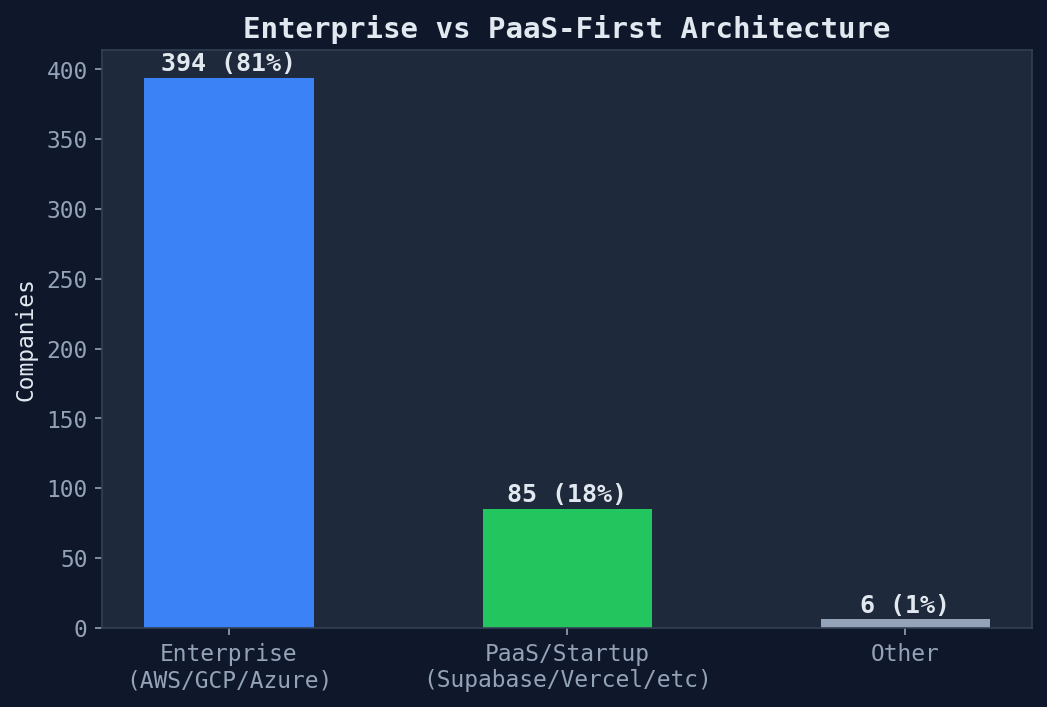
Enterprise vs PaaS-First
A clear divide exists between companies built on enterprise hyperscalers (AWS/GCP/Azure) and those using PaaS platforms (Supabase, Vercel, Render) as their primary infrastructure.
PaaS-First Implications
- Speed advantage: PaaS companies deploy faster with less ops overhead
- Control trade-off: Many controls are delegated via carve-out (not audited directly)
- Migration risk: Moving off Supabase/Vercel is harder than migrating between hyperscalers
- Scaling ceiling: PaaS platforms may not scale to enterprise workloads
Generated from cloud infrastructure landscape module · 485 SOC 2 compliance reports · 2026-03-24